


IT Staff Augmentation Trends & Future Predictions for 2026

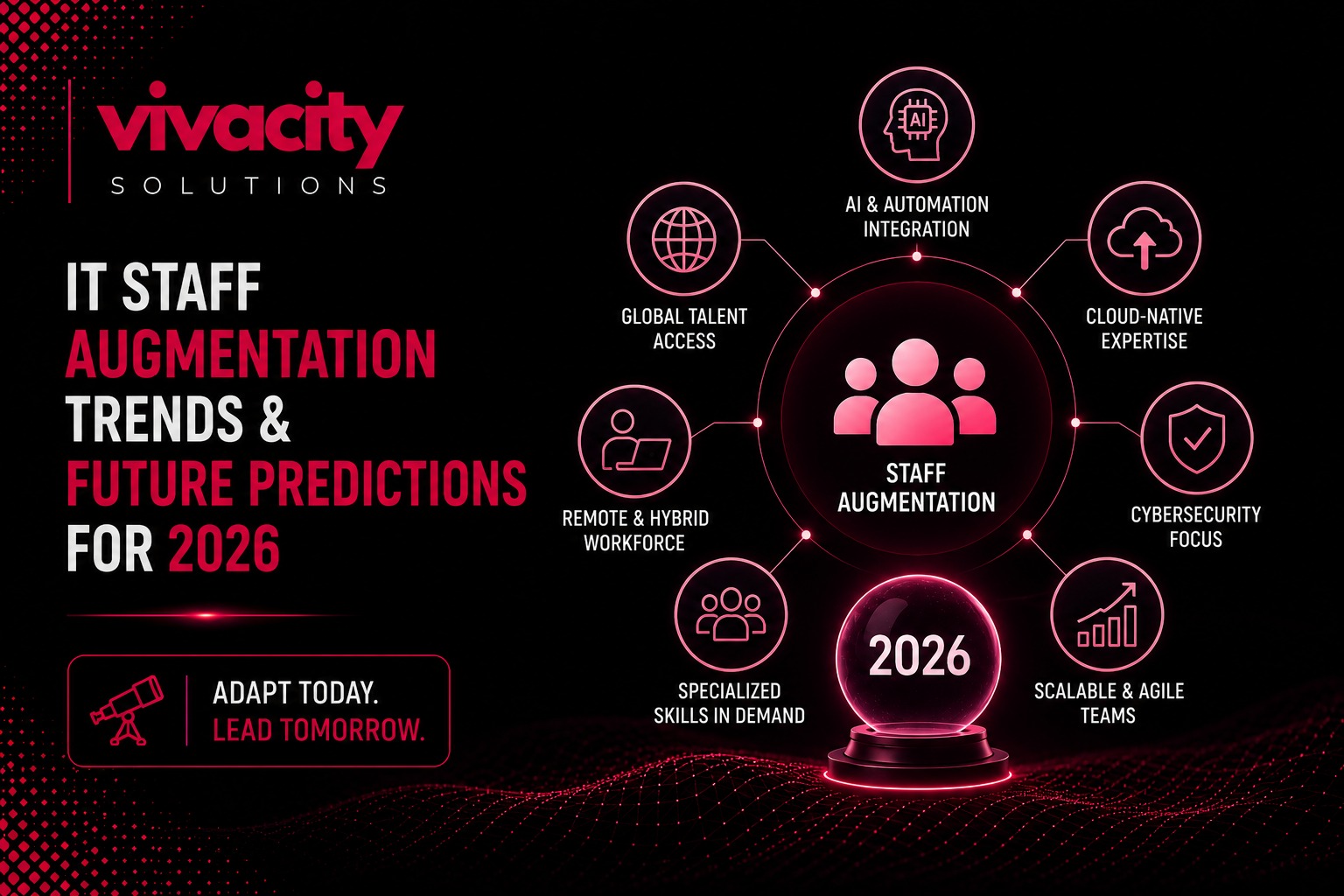
Back in 2025, many predictions were made about augmentation. At that time, most of them sounded ambitious. Now, in 2026, those ideas are no longer assumptions. They have become everyday business practices. Companies are not experimenting anymore. They are actively using these strategies to stay competitive.
The demand for flexible IT talent has grown fast. This shift is driven by rapid AI adoption and constant pressure to reduce costs. At the same time, businesses are pushing for faster digital transformation. Because of this, traditional hiring models are no longer enough. Organizations need speed, flexibility, and expertise all at once through augmentation services.
Today, companies of all sizes think differently. They are no longer asking whether they should use augmentation. Instead, they are focusing on how to make it more effective. They are building hybrid teams. They are hiring globally. They are also combining human skills with AI tools to improve outcomes.
As a result, earlier trends have matured. New patterns have also started to appear. Let’s explore what is shaping augmentation in 2026 and what lies ahead.
augmentation market trends in 2026
The augmentation space is evolving quickly. Several strong trends are shaping how businesses hire and manage talent today. These trends reflect changing priorities, new technologies, and workforce expectations.
The rise in team members who can use AI
AI is no longer just a hiring tool. Earlier, companies used AI mainly to screen candidates. Now, the focus has shifted. Businesses want professionals who can actually work with AI tools daily. This is a major change.
Organizations are not trying to replace humans. Instead, they want to enhance human productivity. Employees who understand AI can deliver faster results. They can also improve accuracy and efficiency. This makes them highly valuable.
Recent data support this shift. Around 78% of organizations now use AI, compared to 55% in 2023. This sharp increase shows how important AI skills have become. However, there is still a problem. The demand for AI and machine learning experts is higher than the supply.
Because of this gap, companies are adjusting their strategies. Many are using staff augmentation for urgent AI-related needs. At the same time, they continue hiring permanent employees for long-term roles. This balanced approach helps them stay agile while building future capabilities.
Increase in offshore and nearshore personnel
Offshore and nearshore hiring is growing stronger in 2026. Companies are looking beyond local talent pools. They are searching globally for skilled professionals. This approach helps them access expertise at competitive costs.
Earlier, about 68% of US companies outsourced projects offshore. Now, this number continues to rise. The offshore market is expected to reach over USD 525 billion by 2030. This growth shows how important global talent has become.
Large companies like Microsoft and Google are already leading this trend. However, smaller businesses are also following the same path. They are realizing that talent is not limited by geography anymore.
This shift offers many advantages. Companies can scale faster. They can reduce operational costs. They can also ensure round-the-clock productivity due to time zone differences. As a result, offshore and nearshore staffing is becoming a standard practice rather than an option.
Implementing hybrid work models
Hybrid work is now a key expectation. Employees want flexibility. They do not want to be tied to a single location. Studies show that around 75% of professionals prefer hybrid work setups. Many are even willing to switch jobs for this benefit.
Because of this, organizations must adapt. They need to offer flexible working options to attract and retain talent. This is where augmentation becomes useful. It allows companies to build hybrid teams easily.
With augmented staff, businesses can scale teams up or down based on project needs. They do not have to worry about long-term commitments. This reduces risk and improves efficiency.
Hybrid models also improve productivity. Employees can work in environments where they feel comfortable. At the same time, companies can maintain control over project delivery. This balance makes hybrid work a powerful trend in 2026.
Diversified staff in the organization
Diversity in IT teams is now more than just a social goal. It has become a business advantage. Companies are focusing on building teams with varied skills and experiences. This helps them solve problems more effectively.
Augmented staff often bring fresh perspectives. They have worked across industries. They understand different challenges. Because of this, they can offer innovative solutions.
Diverse teams also improve creativity. They encourage new ideas. They help organizations adapt quickly to changes. This is especially important in fast-moving industries like technology.
In 2026, companies are actively seeking diversity in their augmented teams. They are not just hiring for technical skills. They are also looking for different ways of thinking. This approach leads to better results and stronger project outcomes.
augmentation predictions
While current trends are shaping the present, future predictions are defining the next phase of growth. Businesses are already preparing for what comes next.
Hyper automation of vendor management
Automation is entering every part of business operations. Vendor management is no exception. In the near future, AI will handle most of these processes.
From onboarding to performance tracking, everything will be automated. AI systems will monitor progress. They will track milestones. They will also manage communication between teams.
This will reduce manual effort. Project managers will not need to spend time on administrative tasks. Instead, they can focus on strategy and execution.
Automation will also improve accuracy. It will reduce delays. It will ensure smoother collaboration between internal and external teams. As a result, vendor management will become faster and more efficient.
Cybersecurity talent is in high demand
Cybersecurity is becoming a major concern. AI-powered threats are increasing. Businesses need strong security systems to protect their data.
However, there is a shortage of skilled cybersecurity professionals. Around 63% of organizations report gaps in this area. This makes hiring even more challenging.
Because of this, staff augmentation is becoming essential. Companies cannot afford to delay security improvements. They need experts immediately.
Augmented cybersecurity professionals help businesses stay compliant. They reduce risks. They also build customer trust. In 2026 and beyond, this demand will only increase.
Multi-cloud & multi-skill teams
Technology ecosystems are expanding. Companies are no longer relying on a single platform. They are using multiple tools and services together.
Because of this, they need professionals with diverse skills. Businesses are looking for experts who understand platforms like AWS, Azure, Salesforce, and more. They also want people who can integrate these systems with AI tools.
This has changed hiring patterns. Companies are no longer searching for single-skill professionals. They want multi-skilled teams who can handle different tasks.
Staff augmentation makes this possible. It allows businesses to bring in experts as needed. This flexibility helps them manage complex projects more effectively.
Reduction in in-house hiring cost
Hiring full-time employees is expensive. It involves recruitment, training, and long-term commitments. Many companies are trying to reduce these costs.
Statistics show that around 300,000 jobs are outsourced to offshore teams. Also, about 66% of US businesses outsource at least one department. This trend is growing in 2026.
Staff augmentation offers a cost-effective solution. Companies can hire talent only when needed. They do not have to invest in long-term salaries or benefits.
This approach also reduces risk. Businesses can adapt quickly to changing market conditions. As a result, cost reduction is becoming a major reason for adopting staff augmentation.
Mitigating the tech talent shortage
The shortage of tech talent is a serious issue. It is slowing down innovation. Many organizations struggle to adopt new technologies because they lack skilled professionals.
Research shows that talent shortages affect the adoption of 64% of emerging technologies. This highlights the scale of the problem.
Staff augmentation provides a practical solution. It allows companies to access global talent pools. They are no longer limited by location.
Businesses can hire experts quickly. For example, they can onboard a Salesforce developer or even a full team within days. This speed helps them meet project deadlines and stay competitive.
Conclusion
Business needs are changing rapidly. Companies require faster delivery, better quality, and lower costs. Traditional hiring methods cannot meet all these demands. That is why augmentation is gaining importance.
It provides flexibility. It offers access to global talent. It helps businesses scale quickly without long-term commitments. These benefits make it a powerful strategy in 2026.
Organizations that adopt this model can build strong teams. They can respond to market changes faster. They can also improve project outcomes. As technology continues to evolve, staff augmentation will play an even bigger role in shaping the future of work.
FAQs
What is Staff augmentation?
Staff augmentation is a flexible hiring model where companies bring in external professionals to support their existing teams for a specific project, skill requirement, or period of time.
Instead of hiring full-time employees, businesses can add skilled experts whenever they need extra support. This helps them complete projects faster, access specialized talent, and reduce the cost and time involved in traditional hiring.
What is augmentation?
Augmentation is a hiring strategy. It allows companies to add skilled professionals to their existing teams. These experts usually work on a temporary or project basis. This model helps businesses fill skill gaps quickly.
Why is augmentation popular in 2026?
It is popular because of flexibility and cost savings. Companies can hire talent when needed. They do not have to commit to long-term employment. This makes it easier to manage changing project demands.
How does AI impact staff augmentation?
AI is changing the way teams work. Companies now look for professionals who can use AI tools effectively. AI also helps in managing teams and improving productivity.
Is offshore staff augmentation reliable?
Yes, it is reliable when managed properly. Many companies use offshore teams successfully. It helps them access global talent and reduce costs. However, clear communication is important.
What is the future of augmentation?
The future looks strong. Trends like automation, hybrid work, and global hiring will continue to grow. Staff augmentation will become a key strategy for businesses worldwide.
Comments (0)
No comments yet. Be the first to share your thoughts!
Leave a Comment