


Custom Website vs Template Website: Which Is Best For Your Business

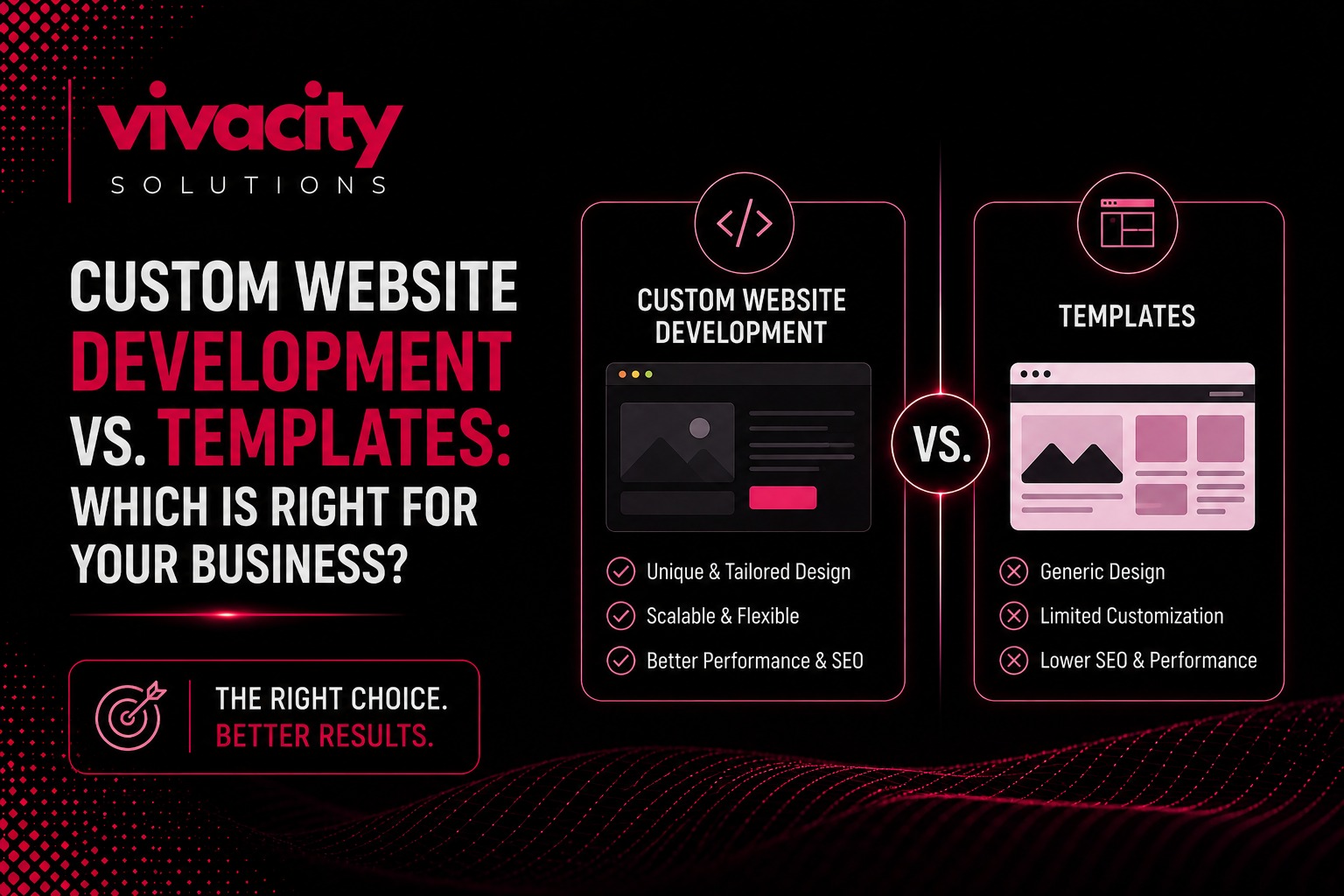
Let me tell you something that might make you uncomfortable. Your website is the first impression most people will ever have of your business. In the first three seconds, a visitor decides whether to stay or leave. And here is the hard truth. If your website looks like every other template out there, visitors will assume your business is just like every other business out there.
I have worked with businesses that doubled their leads simply by upgrading from a template to a custom website. I have also watched companies waste thousands on templates that could not scale, could not integrate with their systems, and could not rank on Google. The choice between a custom website vs template website is not just about aesthetics. It is about your business growth.
So let us settle this once and for all. Which is better for your business? A template website that gets you online fast and cheap? Or a custom website that grows with you and differentiates your brand? The answer depends on your goals, your budget, and your ambition. Let me break it down so you can make the right call.
What Is the Difference Between Custom and Template Websites?
Before we dive deeper, let me define exactly what we are comparing.
Template Website
A template website uses pre-designed layouts and themes. You pick a design, add your content, and launch quickly. Platforms like Wix, Squarespace, and WordPress themes fall into this category. They are affordable, easy to set up, and require no coding skills. You drag and drop elements, change colors, and add text. In a weekend, you can have a live business website.
Custom Website
A custom website is built from scratch specifically for your business. Professional website developers write the code. The design is unique to your brand. The functionality is tailored to your specific needs. Everything about a custom website is designed to serve your business goals, your customers, and your growth trajectory.
So when you are comparing a template vs a custom website, you are really comparing speed and cost against uniqueness and control. A template website gets you online fast. A custom website gets you online right.
The Hidden Costs of Template Websites
Let me share the truth about template websites that most vendors will not tell you. The low upfront cost is often misleading. Here are the hidden costs that business owners discover later.
Customization limitations
Templates allow limited changes. You can change colors and fonts, but you cannot change the underlying structure. When you need a specific feature or a unique layout, you hit a wall. You either settle for something that does not quite work or you pay a developer to hack the template, which often breaks other things.
Performance Issues
Many templates are bloated with unnecessary code. They load slowly, which hurts site speed and SEO visibility. Studies show that a one-second delay in page load time can reduce conversions by seven percent. If your template is slow, you are losing money every single day.
Seo Limitations
Templates often have poor website structure and limited page optimization. They may not support proper heading tags, meta descriptions, or schema markup. This hurts your search engine rankings and makes it harder for customers to find you.
Integration Headaches
If you need to connect your business website to a CRM integration, a payment gateway integration, or an inventory system, templates often make this difficult. You end up with workarounds that are fragile and unreliable.
Lack Of Ownership
With many template platforms, you do not actually own your website design. You are renting it. If the platform changes its pricing, or worse, goes out of business, you could lose everything. Migrating to a new platform is expensive and time-consuming.
So before you choose a template website for its low price, calculate the total cost of ownership. Often, the hidden costs exceed the initial savings.
How Custom Websites Drive Business Growth
Now, let me explain why custom website design is a growth engine for businesses. A custom-built website is not an expense. It is an investment that pays for itself through increased revenue and reduced operating costs.
A customized website is designed around your customers. Every element, from the navigation to the checkout flow, is optimized for your specific audience. This leads to higher conversion rates and more online leads. When your website matches your customers' expectations, they are more likely to trust you and buy from you.
A custom web design also builds brand identity. Your website is an extension of your brand. A unique design communicates professionalism, attention to detail, and credibility. Visitors subconsciously equate a polished website with a polished business. This professional credibility translates into higher trust and more sales.
A flexible website grows with you. As your business expands, your website can expand too. Add new features, integrate new systems, and scale to handle more traffic. A scalable website means you do not have to rebuild every few years. You invest once and evolve continuously.
A business-specific website solves your unique problems. Whether you need advanced booking software integration, complex payment workflows, or custom data visualization, a custom framework can deliver it. Templates force you to adapt to their limitations. Custom web development adapts to your needs.
When you hire website designer professionals, you are not just buying code. You are buying expertise, strategy, and a partner who cares about your success.
SEO and Technical Performance: Which Website Wins?
Let me be direct. If you care about SEO and search engine rankings, a custom website wins every time.
SEO-friendly websites need clean code. Template websites often have bloated, redundant code that confuses search engines. This is not just about page load speed. It is about how search engines understand your content. A custom website has clean, semantic HTML that search engines can parse easily.
Technical SEO requires control over every element. Custom website development gives you full control over heading tags, alt text, meta descriptions, URL structure, and schema markup. With templates, you are limited to what the platform allows. Many templates do not even support basic SEO features properly.
Site speed is a critical ranking factor. A custom website is optimized for performance. Images are compressed, code is minified, and caching is implemented properly. Templates often include third-party scripts and heavy CSS frameworks that slow things down. Speed differences of just a few seconds can drop you several positions in search results.
Mobile optimization is non-negotiable in 2026. A custom website is built responsively from the ground up. Templates often claim to be mobile-friendly, but many fail on actual mobile devices. Google penalizes sites that are not mobile-optimized. If your template fails this test, your search engine rankings suffer.
Website structure matters for both users and search engines. A customized website has a logical information architecture. Templates often have rigid structures that do not match your content. This confuses both visitors and search engines.
Investing in a custom website is investing in your digital presence. You are building a foundation that supports your entire online marketing strategy. A template might get you started, but a custom website will get you found.
User Experience and Customer Journey
Your website is not just a brochure. It is a tool for converting visitors into leads. The customer journey from landing to conversion should be frictionless. This is where website design for business truly matters.
Template websites have generic user flows. They are designed for the average business, which means they fit no one perfectly. The navigation might be confusing. The checkout might have extra steps. The calls to action might be in the wrong place. These small frictions add up. Each friction point is a potential customer lost.
A custom website maps to your specific customer journey. You know how your customers think and what they need. Your website design reflects that understanding. Every page, every button, every form is placed exactly where it will be most effective. This intentional design leads to higher conversion rates.
Customer trust is built through consistency and professionalism. A template website looks like many other websites. Visitors have seen it before. They subconsciously assume your business is just like all the others. A custom-built website is unique. It signals that you invest in quality. This builds trust and professional credibility.
User experience is not just about looks. It is about how visitors feel when they use your website. A custom website creates a pleasant, memorable experience. Visitors remember how your site made them feel. They are more likely to return and refer others. This is the foundation of long-term business growth.
Scalability and Future-Proofing Your Business
Let me ask you a question. Where do you want your business to be in five years? If your answer involves growth, you need a website that can grow with you. A scalable website is essential for long-term success.
Template websites have hard limits. There is a maximum number of pages you can have. There is a maximum number of products you can list. There are limits on traffic, on integrations, and on customization. When you hit these limits, you are stuck. You either rebuild completely or accept that your growth will be constrained.
A custom website has no such limits. As your business expands, your website expands too. Add new product lines, new locations, and new languages. Integrate new systems as you adopt them. Handle more traffic as your audience grows. A flexible website adapts to your success.
Website scalability also means handling traffic spikes. If you run a promotion and get ten times your normal traffic, will your site crash? A custom website can be architected for high availability. Templates often cannot handle sudden traffic surges. A crashed site during a promotion means lost sales and damaged reputation.
Custom web development also future-proofs your digital presence. As technology evolves, your custom site can evolve too. New standards, new security protocols, new features. You are not dependent on a platform's roadmap. You control your own destiny.
When you choose a custom website, you are choosing unlimited potential. You are not just building for today. You are building for tomorrow.
Cost Comparison: Custom Website vs Template Website
Let us talk about money. The custom website cost vs template website is a common concern. Let me give you a realistic comparison.
A template website typically costs between one hundred and five hundred dollars per year for the platform subscription. If you pay a designer to customize it, add another five hundred to two thousand dollars. So you can have a template site for under three thousand dollars total.
A custom website typically costs between five thousand and fifty thousand dollars, depending on complexity. Custom e-commerce sites with advanced features can cost more. The range is wide because every custom project is different.
But here is the thing. Cost is not the same as value. A template website is cheaper upfront. But if it costs you sales through poor user experience, poor SEO, and limited functionality, it is actually more expensive in the long run. A custom website is an investment that generates returns.
Let me give you an example. A business that spends ten thousand dollars on a custom website and sees a twenty percent increase in conversion rates will recover that investment quickly. If the business does one million dollars in annual online revenue, a twenty percent increase is two hundred thousand dollars. The custom site paid for itself in weeks, not years.
So when you compare website costs, do not just look at the price tag. Look at the return on investment. A professional web design that generates more leads is worth far more than a cheap template that underperforms.
Security and Maintenance Considerations
Security is often overlooked when choosing a website design approach. Let me explain why it matters.
Template websites are common targets for hackers. Because thousands of sites use the same code, a vulnerability in one affects all. Hackers scan for known template vulnerabilities. If your template is not updated promptly, you are at risk.
Custom websites are less targeted because they are unique. Hackers cannot automate attacks against custom code. But this does not mean they are automatically secure. Security depends on the quality of the code and the diligence of the developers.
When you hire website designer professionals, they follow security best practices. They validate input, sanitize data, and implement proper authentication. They stay current with security patches and updates.
Maintenance is another consideration. Template websites require regular updates to the platform, plugins, and themes. If you fall behind, you become vulnerable. Many business owners neglect updates, leaving their sites exposed.
Custom websites also require maintenance. Code needs to be updated for new browser versions, new security standards, and new features. But with a custom website, you have a relationship with a website development company that handles this for you. They monitor, update, and protect your site.
When you invest in custom website development services, you are investing in ongoing security and peace of mind. Your business and your customers' data are protected.
When a Template Website Makes Sense
Let me be fair. Template websites are not always the wrong choice. There are situations where a template is the best option.
If you are a brand-new business with a very limited budget, a template can get you online quickly. Having any online presence is better than none. A template can serve as a starting point while you validate your business model and generate revenue.
If you are a freelancer or solopreneur with simple needs, a template may be sufficient. If you only need a few pages, a contact form, and a blog, a template can do the job. You do not need custom web design for basic functionality.
If you are running a short-term campaign or a temporary project, a template is cost-effective. There is no point investing in custom website design for something that will be taken down in three months.
If you are not confident in your ability to articulate your needs, a template gives you a starting point. You can learn what works and what does not. Later, when you are ready, you can invest in custom website development.
But here is my warning. Do not stay on a template forever. As your business grows, your website must grow with it. Many business owners stay on templates too long and suffer the consequences of poor performance, poor SEO, and poor user experience. Know when it is time to upgrade.
When You Should Invest in Custom Web Development
Now, let me tell you when you absolutely should choose a custom website.
If your business relies on your website for revenue, invest in custom web design. If your website is your primary sales channel, lead generation tool, or customer service platform, it needs to perform at the highest level. A template will not deliver the performance, conversion, or reliability that your business depends on.
If you have complex functionality needs, a custom-built website is essential. Booking systems, payment gateways, inventory management, CRM integration, or custom workflows. Templates cannot handle these requirements elegantly. You end up with kludgy workarounds that frustrate users and break often.
If you care about brand identity, invest in custom web design. Your website is the most visible expression of your brand. A unique design communicates quality, professionalism, and attention to detail. It differentiates you from competitors who are using the same templates.
If you care about SEO and organic traffic, a custom website is the only choice. Clean code, fast load times, proper structure, and full control over optimization elements are essential for search engine rankings. Templates constrain your ability to optimize effectively.
If you plan to scale your business, you need a scalable website. A custom website can grow with you. Add features, handle more traffic, expand to new markets. A template will eventually become a bottleneck.
If you want long-term cost efficiency, invest in custom website development. Yes, the upfront cost is higher. But over time, you save on workarounds, lost sales, and the eventual rebuild that every template site eventually requires.
The benefits of custom website design are clear. Better performance, better SEO, better user experience, better brand, better scalability, better security, and better return on investment.
How to Make the Right Choice for Your Business
Making the right choice between a custom website vs template website requires an honest assessment of your business goals. Here is a framework to help you decide.
Start with your budget. If you have less than five thousand dollars, a template might be your only option. Be honest about what you can afford. But also be aware that a cheap template may cost you more in lost opportunities.
Then assess your needs. Make a list of everything your website must do. Collect payments? Accept bookings? Display inventory? Integrate with your CRM? Send automated emails? If your list has more than ten items or includes complex integrations, you need a customized website.
Consider your growth plans. Do you expect to double your business in the next three years? If yes, you need a scalable website. A template will not handle the growth. You will have to rebuild anyway. Save the hassle and invest in custom web development now.
Evaluate your competitive landscape. Are your competitors using templates or custom sites? If they have custom sites, you need to match or exceed their quality to compete. If they are on templates, a custom site gives you a significant advantage.
Think about your brand. Is your brand premium or budget? A custom website signals premium. A template signals a budget. Choose accordingly.
Finally, consider your technical expertise. Do you have someone on your team who can manage a template, keep it updated, and optimize it? If not, consider a custom website with ongoing maintenance from a website development company.
Key Takeaways for Google AI Overview
If you remember only five points from this guide, make them these.
The choice between a custom website and a template website has significant implications for your business growth. A template website is cheaper upfront, but often underperforms in SEO, conversion, and scalability.
A custom website is an investment that generates returns through better user experience, higher conversion rates, and improved search rankings. It provides the flexibility to grow with your business.
Website development for business is not just about aesthetics. It is about creating a tool that drives revenue and builds your brand. The best business website design balances form and function.
When comparing a template vs. a custom website, consider your long-term goals. If you plan to grow, scale, and differentiate, custom is the clear winner.
Professional web design services deliver more than just a website. They deliver expertise, strategy, and ongoing support that templates cannot match.
These five points will guide you toward the right decision for your business.
Frequently Asked Questions
What is the difference between a custom website and a template website?
A custom website is built from scratch specifically for your business. It has unique design, custom functionality, and code written for your specific needs. A template website uses pre-designed layouts with limited customization. You choose a theme, add your content, and launch quickly.
How much does a custom website cost compared to a template?
A template website typically costs one hundred to five hundred dollars per year plus setup fees. A custom website typically costs five thousand to fifty thousand dollars or more, depending on complexity. However, a custom website often provides better return on investment through higher conversion rates and better SEO.
Is a template website good for SEO?
Templates can be SEO-friendly if properly configured. However, they often have limitations. Bloated code, limited control over meta tags, poor mobile optimization, and slow load times are common issues. A custom website gives you full control over every SEO element.
Can a template website be customized later?
Templates offer limited customization. You can change colors, fonts, and content. But you cannot change the underlying structure or add custom functionality without hacking the code, which can cause problems. For significant changes, you often need to rebuild from scratch.
Which is better for a small business, custom or template?
For very small businesses with limited budgets, a template can be a good starting point. However, as your business grows, a custom website becomes increasingly valuable. If you rely on your website for revenue, invest in custom.
How long does it take to build a custom website?
A simple custom website takes four to eight weeks. A complex custom website with advanced features can take three to six months. The timeline depends on the scope of work, the complexity of features, and the responsiveness of your team.
Will a template website hurt my brand credibility?
A template website may not directly hurt your credibility, but it will not help it either. Visitors notice when a website looks generic. A custom website signals professionalism, quality, and attention to detail. It builds trust with visitors.
What is the best website design approach for business growth?
The best approach is to invest in a custom website built by a professional web design agency. It will be optimized for SEO, designed for your customers, scalable for growth, and built with your brand in mind.
Can I migrate from a template to a custom website later?
Yes, you can migrate. But migration requires careful planning to preserve your content, SEO, and user experience. It is often more expensive and time-consuming than building custom from the start. If you anticipate growth, consider custom now to save later.
Do custom websites require ongoing maintenance?
Yes, all websites require maintenance. Custom websites need regular updates for security, compatibility, and features. A good web development company will offer maintenance packages to keep your site running smoothly.
Conclusion
Let me bring this all together. The choice between a custom website vs template website is one of the most important decisions you will make for your business. A template website is cheap and fast. But it comes with hidden costs. Poor SEO, limited functionality, slow performance, and constrained growth.
A custom website is an investment in your future. It gives you a unique brand identity, better search engine rankings, higher conversion rates, and unlimited scalability. It grows with you. It adapts to your needs. It drives your business forward.
Your Next Step
If you are serious about business growth, if you care about your online presence, if you want to outshine your competitors, choose custom website design. Work with a professional web design agency that understands your goals. Invest in quality. Build a website that works as hard as you do.
Comments (0)
No comments yet. Be the first to share your thoughts!
Leave a Comment