


AI in Digital Marketing: A Beginner's Guide

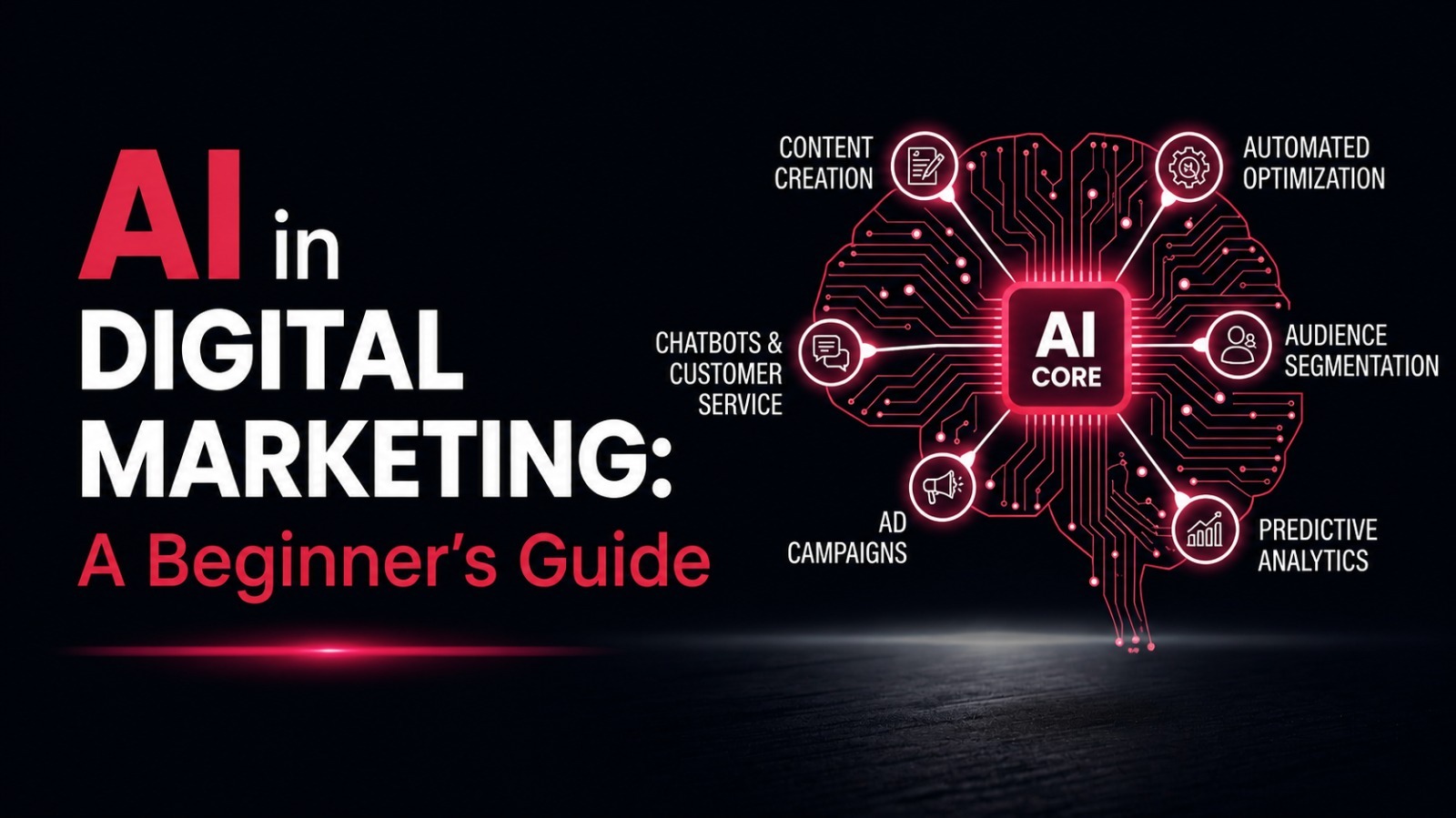
AI in digital marketing has come a long way. It used to sound like science fiction. Now, it’s a game-changer for marketers today.
AI helps create personalized experiences. It predicts customer behavior. It improves how businesses connect with their audience.
That’s why many marketing leaders are using AI-driven strategies. They believe AI will greatly boost productivityby 50%. It also makes marketing more efficientby 45%. Plus, it sparks more innovationby 38%. These stats come from our ‘2024 Global Digital Skills & Training Report: Insights from Corporate Leaders.’
In this article, we’ll explain what AI means for digital marketing. We’ll share examples of how it’s used. Finally, we’ll discuss the skills you need to make the most of AI in digital marketing.
What is AI in Digital Marketing?
AI in digital marketing uses smart technologies such as data collection, natural language processing, machine learning, and analytics to deliver better business insights and automate marketing tasks and decisions.
The biggest benefit of AI is that it can quickly analyze large amounts of customer data. This helps you understand customer behaviors faster.
With AI, you can respond to and customize offers based on what customers do and prefer. Plus, AI gets smarter over time by learning from feedback and new data.
AI opens up great opportunities for marketers. It makes marketing more effective and personal. Customers see relevant content that matches their actions, whether on a website, in an ad, or through a message.
However, AI doesn’t replace humans. It’s a tool that supports and improves human efforts. To use AI in digital marketing well, you still need human skills.
How to Use AI in Digital Marketing
AI is becoming more accessible and easier to use. Today, many companies incorporate AI into their daily tasks. For instance, AI helps create content for pay-per-click (PPC) ads or set up automated email workflows that trigger based on customer actions.
At the Digital Marketing Institute, we asked our members about AI. About 60% said they are familiar with AI and understand how it can be used in marketing. However, 37% admit they don’t have a clear AI strategy in place yet.
So, what does AI really do for marketers? And, how are they using it? Let’s explore the main areas.
Content and Image Creation
One of the biggest challenges for marketing teams is producing content quickly and effectively. They need content marketing such as emails, social media, blogs, ads, landing pages, and more. But creating high-quality content takes time, effort, and resources, things many teams are short on.
This is where AI tools like ChatGPT and Claude come in. These are called generative AI tools or copywriting tools because they can produce text and images automatically. You can use AI to generate email subject lines, ad copy, detailed blog posts, or visual content.
AI writing prompts also help craft catchy headlines and tailor messages for specific audiences. This personalization boosts engagement and makes campaigns more effective. Additionally, AI can help manage influencer marketing campaigns by identifying relevant influencers and tracking campaign performance.
Using these tools saves both time and money. But it's important to review and edit the AI-generated content. Always check that it fits your brand voice and has enough personality before publishing.
Customer Service and Support
AI-driven chatbots are now common. They provide instant answers to simple questions and help guide customers through processes. When customers seek quick support or information, they often turn to chatbots first.
However, AI’s role extends beyond basic responses. It can personalize interactions by analyzing customer data and tailoring messages. AI can predict what customers might need next, making the experience smoother and more satisfying.
AI chatbots can also route complex queries to the right human agents or departments. This streamlines support, reduces wait times, and improves overall customer experience. As a result, AI helps create a more engaging and efficient customer journey.
Customer Segmentation
Understanding your customers is vital for effective marketing. Customer segmentation groups your prospects and clients based on shared interests, behaviors, or needs. Doing this manually is time-consuming and costly.
AI simplifies this process using advanced algorithms. It analyzes data to automatically segment your audience into different groups. For example, it might identify a segment of loyal customers who frequently purchase high-value items or new prospects showing interest in a specific product.
Once segmented, you can target each group with personalized messages, offers, and content. AI allows you to adjust these messages in real time, based on how customers respond.
Additionally, AI recommendation systems can suggest products or services that match customer preferences. Natural Language Processing (NLP) helps analyze reviews and feedback, providing insights to improve products and services further.
SEO (Search Engine Optimization)
AI is transforming SEO (search engine optimization) in many ways. Search engines like Google use complex algorithms to rank pages, and AI enhances this process.
One key development is AI Overviews (previously called Search Generative Experience). This allows AI to generate quick summaries and insights directly in search results, changing how users find information.
AI can automate keyword research by analyzing what users are searching for and what competitors are ranking for. It can also optimize your website content by suggesting relevant keywords, meta descriptions, headings, and tags.
Furthermore, AI predicts future SEO trends by analyzing user behavior and search patterns. This helps you stay ahead of the competition.
Voice and visual search are also growing in popularity. AI can help optimize your content for these formats by focusing on natural language keywords and adding metadata to images and videos.
Pay-Per-Click Marketing
Pay-per-click (PPC) marketing means you only pay when someone clicks on your ad. This makes it a cost-effective way to reach potential customers. PPC campaigns can be highly targeted, allowing you to focus on specific demographics, interests, or behaviors. This helps attract the right audience quickly.
One of the biggest advantages of PPC is the ability to see fast results. You can launch a campaign, analyze its performance, and make adjustments in real-time. Plus, PPC ads are flexible; you can tweak your keywords, bids, and ad placements to improve outcomes.
Now, here’s where AI in digital marketing comes into play. AI can significantly boost your PPC efforts by automating and optimizing key areas:
-
Keyword research: AI tools can analyze vast amounts of data to find the most effective keywords for your ads.
-
Bidding and targeting: AI can automatically set bids and target audiences based on real-time data, ensuring your ads reach the right people at the right time.
-
Ad creation: AI can help generate compelling ad copy and visuals, making your ads more appealing.
-
Ad scheduling and placement: AI can determine the best times and platforms to display your ads for maximum impact.
-
Predictive analysis: AI models forecast future trends and customer behaviors, helping you plan better campaigns.
-
Fraud detection: AI systems can spot invalid clicks or fraudulent activity, saving your budget.
As AI technology keeps evolving, we can expect new ad formats, more precise targeting options, and better measurement tools. Staying updated on these advancements is crucial for marketers who want to stay ahead.
Data Analytics
Modern marketing generates enormous amounts of data from multiple channels social media, websites, email, and more. This data holds valuable insights but can be overwhelming to analyze manually.
This is where AI in digital marketing shines. AI can process huge volumes of data at lightning speed. It helps marketers uncover patterns, identify trends, and make sense of complex information.
For example, AI can detect anomalies, unexpected changes, or irregularitiesin your data. It can also identify hidden patterns that might go unnoticed otherwise. This deep analysis enables hyperpersonalization, meaning your marketing messages become highly tailored to individual customers.
Understanding your customers better allows you to craft more targeted messages, improve product recommendations, and enhance overall customer experience. In retail, AI can optimize inventory levels by predicting demand, ensuring you have the right stock at the right time. It also helps improve customer service through chatbots and personalized assistance.
A powerful tool in this space is ChatGPT with its Advanced Data Analysis plugin. You can upload spreadsheets or datasets, and ChatGPT helps you find meaningful insights, trends, and correlations, saving time and boosting your decision-making.
Ultimately, integrating AI in data analysis helps you gain smarter insights and make better business decisions that align with your goals.
Email Marketing
Email marketing remains one of the most effective ways to connect with prospects and keep existing customers engaged. It’s personal, direct, and scalable. However, creating compelling email campaigns can be time-consuming.
AI in digital marketing can transform your email strategy by making it smarter and more efficient. Here’s how:
-
Performance analysis: AI tools analyze your past email campaigns to identify what works best. For example, they can suggest high-performing subject lines or optimal send times.
-
Triggered workflows: AI can set up automated email sequences based on user actions. If a customer abandons their shopping cart, an AI-powered system can send a reminder or special offer automatically.
-
Campaign analysis: AI helps you review and improve your email campaigns by tracking open rates, clickthroughs, and conversions.
-
Personalized content: AI can craft tailored messages based on customer data. For example, it can recommend products or customize email copy for different audience segments.
-
Dynamic content: AI allows your emails to change content dynamically, displaying different images or offers depending on the recipient’s preferences.
-
A/B testing: AI automates testing different versions of your emails, helping you discover the most effective ones quickly.
Additionally, AI can help clean your email lists by identifying inactive or invalid addresses. It can also analyze your email schedule, suggesting the best times and frequency to send emails for maximum engagement.
What Are the Most Common Skills in AI in Digital Marketing?
Using AI in digital marketing offers many opportunities. The secret to success is making AI work well with your specific role. It’s not enough to just know how to operate AI tools. You also need to understand why you’re using them.
First, ask yourself if AI aligns with your business and career goals. Will it help you reach your targets more quickly? Is it saving you time, or just adding more work? These questions help you use AI wisely and effectively.
Start by learning the basics of AI. Understand how it works and what it can do. Then, go deeper into specific skills. Use AI to generate and nurture leads, improve customer service, and make your marketing efforts more efficient.
According to an article by The Economist and Think with Google, “marketers must embed AI expertise within their ranks.” They emphasize mastering the art of choosing the right tools and integrating them smoothly. It’s important that automation enhances human judgment, not replaces it. The top performers will use AI as a disciplined, strategic tool woven into their overall marketing plans, operations, and decision-making processes.
So, what technical skills should you focus on to boost your AI in digital marketing capabilities? Here are some of the most important ones:
-
Data Management: Knowing how to organize and handle large amounts of data efficiently.
-
Data Analysis: Learning how to interpret data to find valuable insights.
-
Testing: Running experiments to see what works best and refining strategies accordingly.
-
Content Personalization: Using AI to tailor content specifically for individual users.
-
Marketing Automation: Automating repetitive tasks like email campaigns and social media posts.
-
Process Analysis and Improvement: Continuously examining marketing processes and finding ways to make them better with AI.
Building these skills can help you feel more comfortable with AI technology. The more familiar you become, the less intimidating it will seem. This confidence allows you to leverage AI more effectively for your marketing goals.
However, technical skills are just one part of the picture. Companies also want marketers with creative and problem-solving abilities. They look for people who can think outside the box and adapt quickly.
In addition to technical skills, four key soft skills are crucial in AI in the digital marketing landscape:
-
Strategic Thinking: Planning how to use AI to achieve long-term goals.
-
Innovation: Coming up with new ideas and approaches using AI tools.
-
Creativity: Designing engaging campaigns and content that stand out.
-
Agile Thinking: Being flexible and quick to adapt in a fast-changing environment.
These soft skills will complement your technical knowledge. They help you become a more well-rounded marketer, ready for the future of AI-driven digital marketing. By developing both sets of skills, you can stay ahead in this evolving field and make the most of what AI has to offer.
Conclusion:
AI in digital marketing can seem overwhelming at first. It’s normal to wonder how it fits into your role. But it shouldn’t be seen as a threat. Instead, think of AI as a helpful partner. It can support you in reaching your goals more easily.
AI tools are great for handling boring, repetitive, and time-consuming tasks. This gives you more time for creative and strategic work.
Learning and mastering AI will also boost your skills. You’ll gain new experience in a fast-growing technology. Companies are looking for professionals who understand AI, making it a valuable skill for your career.
Use AI to elevate your digital marketing activities
Use AI to boost your digital marketing services. It’s a game-changer. AI helps personalize, optimize, and automate many marketing activities. Vivacity Solutions is playing an important role in growing your business online
Comments (0)
No comments yet. Be the first to share your thoughts!
Leave a Comment